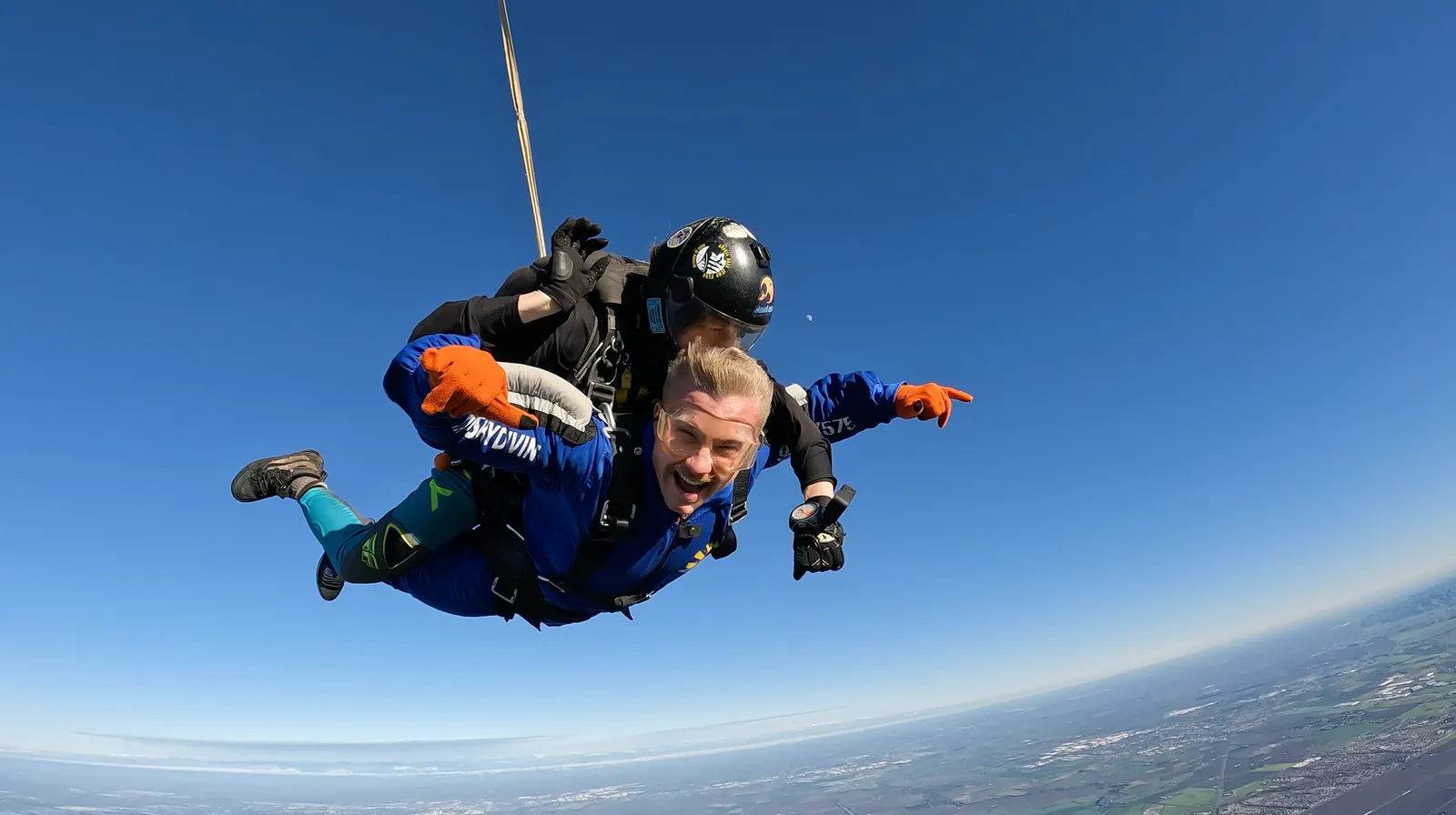
Your First Tandem Skydive:
What to Wear, How to Prepare
& What to Expect
A practical first-jump guide for what happens before, during, and after your tandem skydive — from check-in and training to freefall, canopy flight, and landing.
What Should You Expect on Your First Tandem Skydive?
Your first tandem skydive is designed for beginners. You'll check in, complete a short training session, get fitted with a harness, board the aircraft with your instructor, climb to altitude, experience freefall, fly under canopy, and land with your instructor.
You do not need previous skydiving experience. Your best job is to arrive prepared, listen closely during training, wear comfortable clothing and secure shoes, and follow your instructor's directions throughout the experience.
How to Prepare for Your First Tandem Skydive
Most of the preparation is simple. You do not need special skydiving gear or previous training before arriving. Focus on being comfortable, rested, and ready to follow the drop zone's instructions.
Eat Normally
Don't arrive on an empty stomach. A normal meal or light meal before your appointment can help you feel more comfortable during a long day at the drop zone.
Give Yourself Time
Skydiving is weather and aircraft dependent, so your total visit can take several hours. Avoid scheduling something immediately afterward.
Check Conditions
Weather can affect jump operations. Follow any instructions from the drop zone about your appointment before traveling.
What Should You Wear for a Tandem Skydive?
Comfortable athletic clothing is usually the easiest choice for a first tandem jump. Your clothing should let you move freely and should not have loose pieces that can flap around during freefall.
What Happens on the Day of Your First Skydive?
While timing can change depending on weather, aircraft operations, and the day's schedule, the basic tandem process follows a familiar sequence.
Check In
Complete the required paperwork and get oriented to the drop zone.
Meet Your Instructor
Your tandem instructor will explain the jump and answer questions before you gear up.
Training & Harness
You'll learn the body position used during exit, freefall, and landing, then get fitted with your tandem harness.
Board the Aircraft
You'll ride to altitude with your instructor and other jumpers while the final preparations are completed.
Exit & Freefall
At altitude, you'll exit securely connected to your instructor and experience the part most first-time skydivers came for — freefall.
Canopy Ride & Landing
After the parachute opens, the experience becomes much quieter. You'll enjoy the view before preparing for landing with your instructor.
What Does Your First Skydive Feel Like?
The aircraft ride is often when anticipation feels strongest. Once you exit, the sensation is different from simply falling off something tall. In stable freefall, the airflow becomes the dominant sensation while you move with your instructor.
When the parachute opens, the pace changes dramatically. Freefall gives way to a calmer canopy ride where you can look around and take in the Northern California landscape before landing.
Anticipation
It's normal for first-timers to feel a mix of excitement and nerves during the climb.
Adrenaline
The first seconds after exit are fast, exciting, and often the most memorable part of the jump.
Scenic Flight
Once the parachute is open, you can enjoy a slower aerial view before returning to the landing area.
Is It Normal to Be Nervous Before Skydiving?
Yes. Feeling nervous before a first skydive is common, especially during the waiting period and aircraft climb. You are doing something completely new, and your brain knows it.
The most useful approach is to focus on the next instruction rather than the entire jump at once: check in, train, gear up, board the aircraft, and follow your instructor. Tandem skydiving is built so a first-time participant can experience a skydive with an experienced instructor managing the technical parts of the jump.
Should You Get Photos or Video of Your First Skydive?
Your first skydive goes by quickly, so many first-time jumpers choose an optional photo or video package. It gives you something to look back on after the adrenaline settles — and something to show friends who still can't believe you jumped out of an airplane.
Optional Media Packages
Photo and video packages are separate from the base tandem price. Review the available options before or during booking.
Want to compare the complete cost before booking? See our Bay Area skydiving cost guide.
Planning Your First Skydive From the Bay Area
Bay Area Skydiving's drop zone is in Byron, California and welcomes first-time jumpers from San Francisco, Oakland, San Jose, Livermore, Pleasanton, Tracy, and other Bay Area communities.
Coming from the South Bay? Our skydiving near San Jose guide covers what San Jose-area jumpers should know before planning their trip to the Byron drop zone.
Byron, California Drop Zone
Your jump takes place at Bay Area Skydiving in Byron — not in downtown San Francisco, Oakland, or San Jose.
Loved Your First Jump? You Can Learn to Skydive
A tandem jump can be a one-time bucket-list experience, but it can also be your introduction to the sport. If you finish your jump already wondering when you can go again, the next step is to learn about structured skydiving training.
Bay Area Skydiving offers Accelerated Freefall training for people who want to build the skills required to progress toward independent skydiving.
First Tandem Skydive Checklist
First Tandem Skydive FAQs
Do I need any experience for a tandem skydive?
No. Tandem skydiving is designed for first-time jumpers. You'll receive training before the jump and remain attached to your tandem instructor throughout the skydive.
What should I wear skydiving?
Comfortable athletic clothing and secure, closed-toe shoes are practical choices. Avoid loose accessories and ask the drop zone if you're unsure about clothing for the day's weather.
Should I eat before skydiving?
Most first-time jumpers are more comfortable after eating normally rather than arriving on an empty stomach. Avoid overthinking it — a regular meal or light meal is usually a reasonable approach.
How long should I plan to be at the drop zone?
Plan for several hours. Tandem operations depend on weather, aircraft activity, and the day's jump schedule, so exact timing can vary.
Is it normal to be scared before skydiving?
Yes. Nervousness and excitement are both common before a first jump. Focus on your instructor's training and take the experience one step at a time.
How much does a tandem skydive cost?
Prices can change with altitude options and promotions. See our current tandem pricing or read our skydiving cost guide before booking.
Can I get photos or video of my first skydive?
Yes. Optional media packages are available for tandem jumps. They are priced separately from the base tandem experience.
Where does Bay Area Skydiving operate?
Bay Area Skydiving's drop zone is in Byron, California, serving first-time jumpers from across the San Francisco Bay Area and Northern California.
You know what to expect.
Now experience it.
Book your first tandem skydive with Bay Area Skydiving in Byron, California.